What Is Agentic AI — and What Does It Mean for Business Owners?
Agentic AI doesn't just answer questions — it takes autonomous action across multiple steps. Here's what that means for your business right now.
For most of the past decade, "AI" meant chatbots — systems that answered FAQs, followed scripts, and escalated to humans when anything got complicated. Those systems were useful but fundamentally limited: they could only respond. They couldn't plan, decide, or take a goal and figure out the steps to achieve it. Agentic AI is an entirely different category.
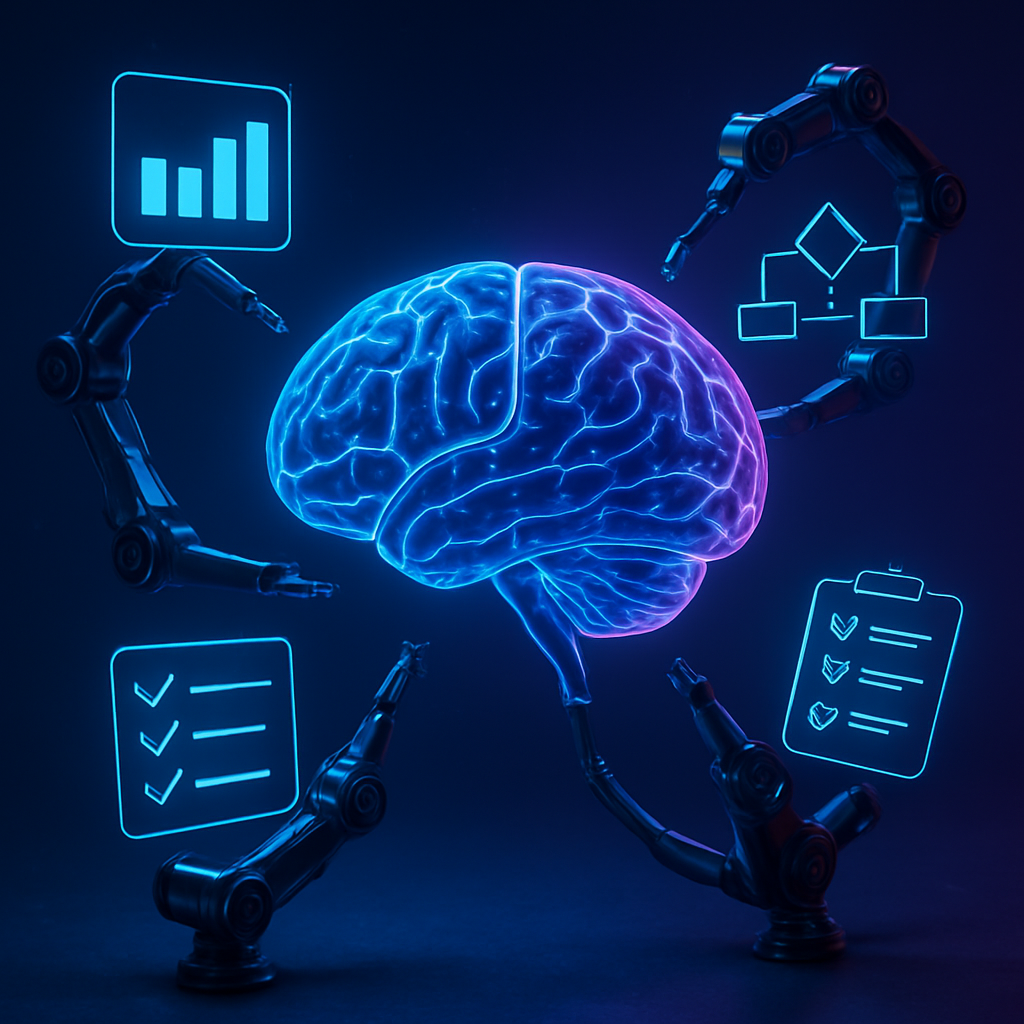
The word comes from "agency" — the ability to act independently toward a goal. Agentic AI can receive a high-level goal, break it into sub-tasks, execute those sub-tasks autonomously using available tools, adapt when things don't go as planned, and report on outcomes.
Traditional AI: "What are your business hours?" → "We're open Monday–Friday, 9am–5pm."
Agentic AI: "A high-value prospect just visited our pricing page for the fourth time without converting. Handle it." — The agent looks up the prospect, reviews their engagement history, drafts a personalized message, sends it via the appropriate channel, logs it in the CRM, and schedules a follow-up if there's no response. One instruction. Many autonomous actions.
When a new lead arrives, the AI researches the prospect, scores their fit against your ideal customer profile, drafts a personalized first message, and queues them for the right follow-up sequence — before a human even sees the lead.
Given a content goal, the AI researches trending topics, creates a content calendar, writes each piece with sourced research, generates hero images, and schedules publication — surfacing a final review for human approval before going live.
An agentic sales manager monitors your entire pipeline continuously — flagging stale deals, drafting re-engagement messages, identifying which deals are most likely to close this month, and preparing briefings for upcoming calls.
The most important design principle in agentic AI is the degree of autonomy you give it. Start toward "Suggest" — the AI recommends actions but a human approves. Move toward "Execute with notification" as confidence builds. Reserve full autonomy for well-defined, lower-stakes workflows where mistakes are limited and easily corrected.
Agentic AI doesn't replace humans — it changes what humans do. The tasks that fill most employees' days — repetitive responses, data entry, routine follow-up — can increasingly be handled by agentic systems. For a small business with 3-5 employees, agentic AI can give your team the effective output capacity of a team twice its size — without doubling payroll.
AI agents, automation, and custom web apps — built for founders who move fast.
Get a Free Consultation